Can 50 Iridescents Defeat Warzone Streamers in the First Iri Invitational?
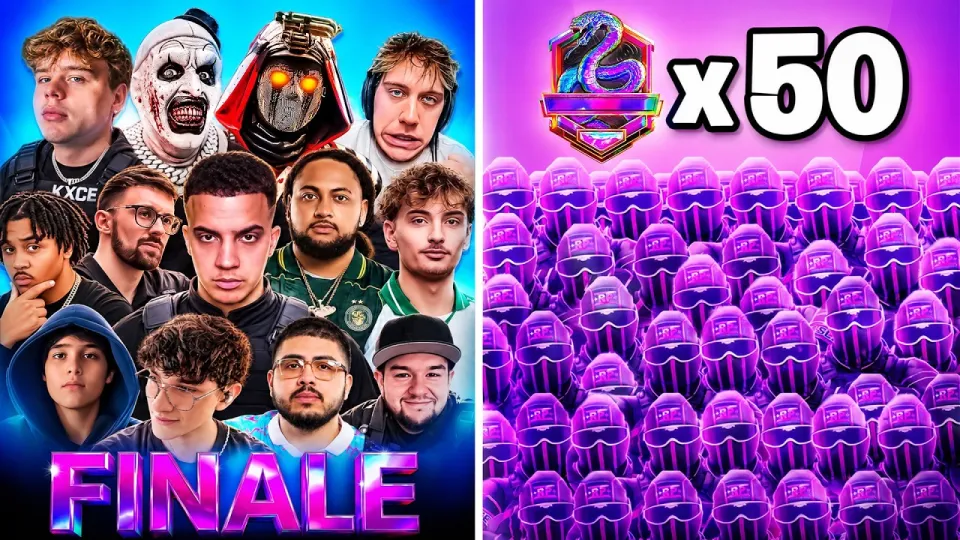
Video: Can 50 Iridescents Defeat STREAMERS? (FINALE)
Want articles like this for your own video to promote it on YouTube and Google? Order them through the Telegram bot @sat_sit_bot. The bot writes and publishes the articles itself (with your YouTube video embedded) on popular topical websites (no ads). Your first 50 articles are free.
· based on the channel Swagg
The short answer is that the Iridescent side did not walk away with a clean sweep, but the gap between ranked grinders and full-time streamers was far smaller than most viewers expected. Across six games of Warzone ranked solo customs on Rebirth Island, the 50-Iridescent squad traded wins with some of the biggest names in the scene and forced several of them into uncomfortable endgames. The first Iri Invitational, organized and hosted by Swagg, turned a hypothetical Reddit argument into a $2,000 tournament — and you can catch Swagg's live ranked runs and future events on his Twitch channel.
What the Iri Invitational actually was
The event was a custom-lobby experiment: 50 players who had reached Iridescent in Warzone ranked, dropped into the same lobbies as a roster of established streamers and competitors. Six games were played, all on Rebirth Island, all in the ranked solo customs format, with $2,000 on the line and every participant's point of view recorded. The player list reads like a who's who of the Warzone community: Swagg himself, Shifty, Hisoka, JoeWo, Metaphor, KxceTwin, Diablo, Dongy, Kenner, Ketchup, Repullze, Saxzu, Lucky Chamu, Hero, Biffle-adjacent names from the wider scene, and dozens more from the Iridescent pool. The video runs as a full finale with all POVs stitched together, so the story of the series is told through kills, rotations and comms rather than a single highlight reel.
What made it more than a content stunt is the ranking context. Iridescent is the top tier of Warzone ranked, and reaching it requires consistent placement plus kill volume across hundreds of matches. Streamers who play the game professionally have the same rank on paper, but their day job is creating content, not grinding placement points. The Invitational was designed to test whether that difference shows up when both groups share a lobby.
How the Iridescent players held up against the streamers
The most striking takeaway from the series is that raw rank translated into real results. Iridescent players won fights against streamers in close-quarters Rebirth Island engagements, held power positions in the final circles, and in several games forced the big names to play from behind. The streamers' advantage showed up less in gunskill and more in decision-making under pressure: knowing when to third-party, when to reset a fight, and how to convert a two-kill lead into a top-five placement.
A few patterns stood out across the six games:
- Rotations beat raw aim. Iridescent squads that moved early into the next zone consistently out-placed players who chased kills in the opening minutes.
- Rebirth Island rewards aggression with a cost. The map's tight layout means every fight attracts a third party, and streamers who over-committed to early duels paid for it.
- Loadout timing decided mid-games. Players who secured their primary weapon and perks on schedule controlled the middle of each match.
- Endgame positioning separated the top finishers. The final circles came down to who held high ground and who was forced to push through open water and stairwells.
The result was a series that felt competitive rather than ceremonial. The Iridescent side did not need to win every game to prove the point — they needed to show that the rank means something, and by the later games the streamers were clearly treating the lobbies as real matches rather than content.
The Kenner question and why cheating talk dominated the finale
No discussion of this series is complete without the Kenner segment, which the video flags with its own chapter mid-run. Kenner's performance drew suspicion from both opponents and viewers, and the conversation spilled straight into the comments: some argued the gameplay was obviously not legitimate, others asked for a LAN appearance to settle it, and a few pointed out that putting a controversial player in a $2,000 invitational is exactly the kind of decision that generates heat. Swagg addresses it on camera during the series, and the clip of him glancing at the camera mid-match became one of the most-referenced moments of the whole event.
The honest framing is this: nothing in a YouTube video proves or disproves cheating, and Warzone's anti-cheat and spectator tools are the only real arbiters. What the segment does show is how quickly a community tournament turns into a trial by clip. For organizers, the lesson is that vetting and transparency matter as much as the prize pool. For viewers, the takeaway is to treat suspicion as a question, not a verdict — and to push for the LAN-style verification that several commenters asked for.
Why the format worked better than a standard streamer tournament
Standard Warzone invitationals usually stack a lobby with familiar creator names, and the outcome is predictable because everyone knows everyone's habits. The Iri Invitational inverted that: the majority of the lobby was unknown to the audience, which made every kill feel like a discovery. A ranked grinder knocking a well-known streamer out of a game is inherently more interesting than two creators trading eliminations for the twentieth time.
The all-POV structure also helped. Instead of one curated perspective, the finale cuts between players so viewers can see the same fight from both sides — the push, the counter, and the third party arriving late. That editing choice is why the six-game run holds attention despite its length, and it is the main reason the series reads as a template other organizers could copy.
Common questions from the community, answered
Several themes recurred in the reaction to the finale, and they are worth addressing directly.
- Where were Biffle and Booya? Two of the most-requested names did not appear in this edition. Roster invites in community events depend on availability, scheduling and willingness to play customs, so absences are usually logistical rather than a statement about skill.
- Why did some players leave early? A few competitors exited after rough starts, which drew criticism from viewers who wanted a full six-game commitment. In a self-organized event with no contractual obligation, that is a real risk organizers have to plan around.
- Is Metaphor underrated? The reaction to Metaphor's play was overwhelmingly positive, particularly around his smoke usage and mouse-and-keyboard movement. His performance is a good argument that technical, input-optimized play deserves more attention than it gets.
- Will there be another one? The finale format and the recurring calls for a yearly series suggest demand exists. Whether it returns depends on sponsorship, prize money and the willingness of top creators to commit to a full slate of games.
Useful links
- Watch Swagg live and catch future invitationals: https://www.twitch.tv/swagg
- Swagg merchandise via Faze Clan's Nuke Squad collection: https://shop.fazeclan.com/collections/nuke-squad
- Join the community Discord: https://discord.gg/QZwrKfWfSW
- Follow Swagg on Twitter: https://twitter.com/Swagg
- Follow Swagg on Instagram: https://www.instagram.com/swagg_/
The bottom line on Iridescents versus streamers
The Iri Invitational answered its own question in a more interesting way than a simple yes or no: Iridescent players can absolutely hang with streamers in Warzone ranked customs, and on Rebirth Island the difference between the two groups is smaller than the rank labels suggest. What separates them is consistency in decision-making and endgame composure, not aim. The Kenner controversy added noise, but it also exposed a real gap in how community tournaments handle verification. Swagg's channel turned a hypothetical debate into six watchable games with all POVs, a $2,000 prize and a format that other organizers should study — and if the series returns, expect bigger names, stricter vetting and even more pressure on the ranked side to prove the point again. For now, the best way to follow what comes next is to drop into the live stream at https://www.twitch.tv/swagg.
Key takeaways
- Format: 6 games of Warzone ranked solo customs on Rebirth Island
- 50 Iridescent-ranked players against a roster of top Warzone streamers
- Prize pool: $2,000 in the first Iri Invitational, hosted by Swagg
- Featured names include Shifty, Hisoka, JoeWo, Metaphor, KxceTwin, Diablo, Dongy, Kenner and Ketchup
- Kenner's gameplay sparked a cheating debate mid-series, with a dedicated segment in the video
Questions & answers
Did the 50 Iridescent players actually beat the streamers in Warzone?
They did not sweep the series, but they won games and forced streamers into difficult endgames across the six Rebirth Island matches. The gap showed up mostly in endgame decision-making rather than raw gunskill, which is why the event felt competitive instead of one-sided.
What was the prize pool and format of the Iri Invitational?
The event paid out $2,000 and was played as six games of Warzone ranked solo customs on Rebirth Island. Fifty Iridescent-ranked players shared lobbies with a roster of well-known streamers, and the finale video compiles every participant's point of view.
Was Kenner cheating during the event?
The video includes a dedicated segment questioning Kenner's gameplay, and the debate carried into the comments. No clip in a YouTube video proves anything either way; the only real answers come from Warzone's anti-cheat systems and LAN-style verification, which viewers have asked for.
Why were Biffle and Booya missing from the lineup?
Their absence was one of the most common complaints, but community invitationals depend on scheduling, availability and each player's willingness to commit to customs. Missing names are usually a logistics issue rather than a reflection of skill or rank.
Source: Can 50 Iridescents Defeat STREAMERS? (FINALE) · Markdown version